
Chinese travelers turned away at Suvarnabhumi Airport say a broker offered to fix their entry for 18,000 yuan, about 90,000 baht. Thailand’s Immigration Bureau calls the claim unsubstantiated. It has asked complainants to bring evidence.
The bureau has given that answer before. This latest allegation follows a run of similar claims about Thailand’s main gateway since mid-2025. In each case officials denied that their officers were involved and blamed scammers using their name. None of those cases has ended in published findings.
What happened on Thursday
The allegations surfaced on social media after Chinese passengers were refused entry at Suvarnabhumi on Nov. 12.
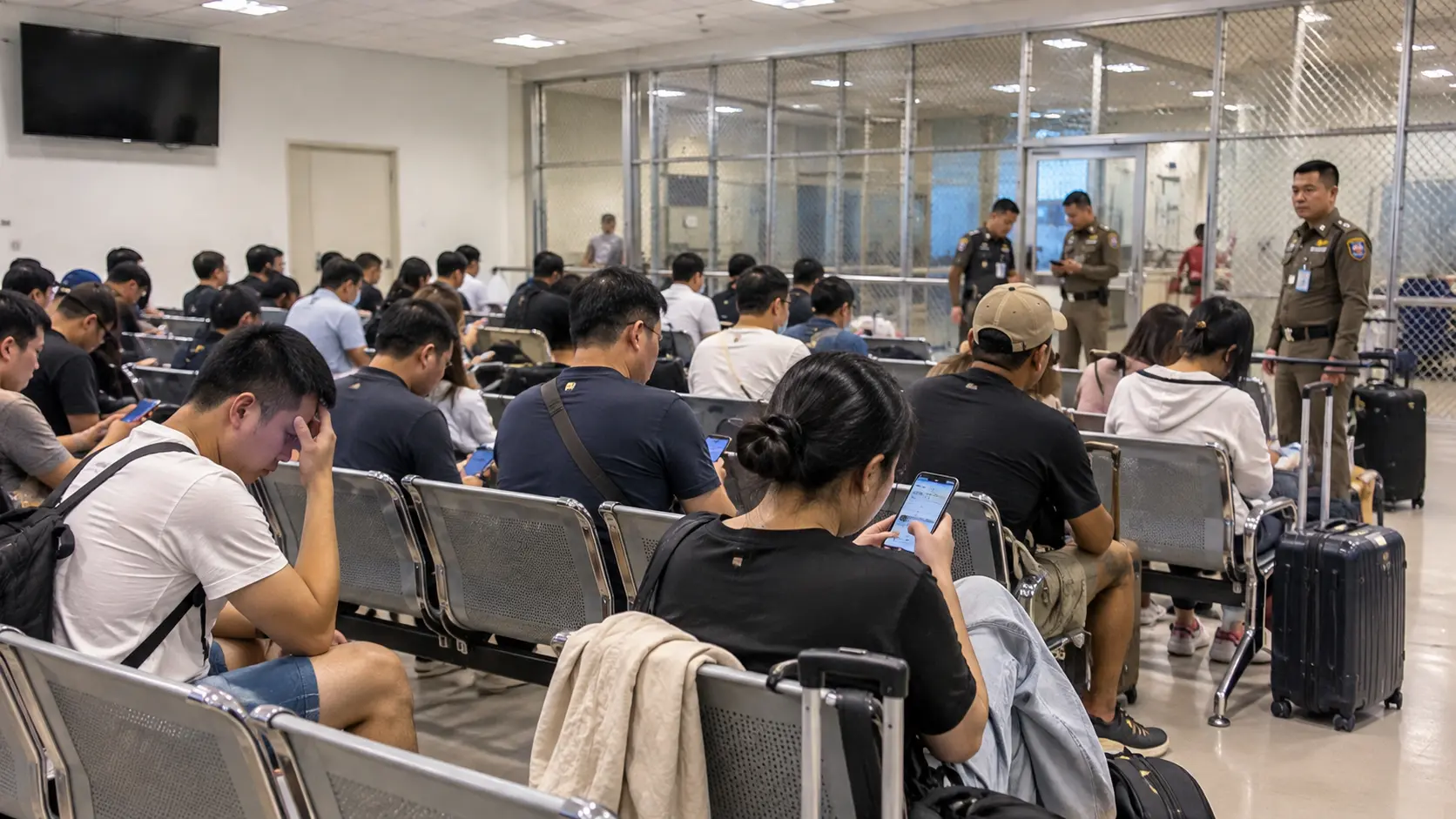
Pol Maj Gen Choengron Rimphadee, the bureau’s deputy commissioner and spokesman, told the Bangkok Post that 45 of the 92 passengers refused entry that day were Chinese. He said they were high-risk travelers who claimed to be tourists but could not show verifiable travel plans. The bureau said all 92 have since been sent home.
Choengron said Chinese social media pages have been advertising easy entry through supposed contacts inside Thai immigration, paid in advance, since screening was tightened. He said the bureau had already warned people not to be scammed by their fellow nationals. He denied that Chinese travelers are singled out and invited anyone with concrete evidence to come forward. He also repeated the line of Immigration Commissioner Pol Lt Gen Nopasilp Poolsawat: “Good people can pass, but criminals will be arrested.”
The commissioner has ordered Pol Maj Gen Kathathorn Khamthiang, commander of Immigration Division 2, to look into the allegations. No findings have been published.
A familiar script
The pattern goes back at least 17 months.
In June 2025, a Chinese man posted a video filmed in Suvarnabhumi’s arrivals hall. It suggested Thai immigration officers could be bribed to “open the way” for entry. The officer shown in the clip filed a police complaint. He said he had only helped the man fill in his online arrival card. Choengron, then the Division 2 commander, said Chinese agents were creating situations to drum up business, claiming they could secure entry with help from some officers.
In March 2026, the Cambodian newspaper Khmer Times reported that Cambodian and Indian travelers were refused entry, made to book immediate return flights and charged an unofficial 1,000-baht “service fee.” The bureau said the claims had no basis in fact.
In June 2026, Division 2 set up a fact-finding committee into a network of Chinese “bao guan” (guaranteed passage) brokers. The brokers reportedly charged up to 10 times more after checks were tightened, with fees of 4,500 to 12,000 baht depending on visa type. The bureau said any officer found to be involved would face disciplinary and criminal action without exception. Nearly five months later, there are no confirmed findings of official involvement.
Officials have not answered the question underneath all of these cases. If entry cannot be bought, why can brokers still sell it, and at rising prices? The bureau has also not said what the June committee found, or whether any broker has been charged.
There is precedent for the suspicion. In 2018, four immigration officers were removed over a Facebook complaint about a Chinese visitor who waited six hours for a visa on arrival at Don Mueang Airport, in a case involving “tips” to fast-track visas. Earlier this year, anti-corruption activist Atchariya Ruangrattanapong alleged that staff at Bangkok’s Suan Phlu immigration detention center sold VIP rooms to detainees for about 200,000 baht a person per month. Police have announced no findings, and the allegations remain unproven.
The room nobody wants to own
The second complaint is about the place where refused passengers wait for a flight home. The Chinese travelers called it a “detention area” and said it was overcrowded and smelled bad.
Choengron said it is a temporary waiting area, not a cell for criminal suspects. He said people come and go as airlines arrange return flights, and that passengers keep their phones. He also said the room is run by airline groups, not by Immigration. Even so, the bureau describes it as having essential facilities in line with human rights principles. It said a separate, better-equipped waiting area was built by Airports of Thailand at Immigration’s request to ease crowding. That area is only for passengers who can fly out without staying overnight.
Responsibility for the room is split. In March, a Division 2 spokesman said that under international aviation rules, the airline that flew a passenger in must provide a detention room and the return flight, calling it “a matter for the airlines.” Yet it is Immigration that defends the room in public each time.
The Cambodian travelers gave a harsher account in March. One said his group was held in a room surrounded by iron fencing, which he likened to a prison, with about 20 people inside. He said it smelled foul because most detainees had not showered. They said they were held until the next day, had their passports taken, and were charged exactly 1,070 baht for the stay, with little choice in the matter.
The bureau’s March rebuttal said Immigration charges no such fee. It did not say whether anyone else collects money from people held in the room, or who sets the price.
The numbers
The bureau says 4,879,002 Chinese passengers have entered Thailand this year and 12,880 were refused, or 0.26 percent. That share sounds small. It still works out to about 40 Chinese nationals a day, and each of them is a potential customer for a broker who promises another try.
The Chinese figures are only part of the picture. Nationwide, the bureau refused entry to 29,490 foreigners of all nationalities between January and May alone under its “No Entry, No Stay, No Escape” campaign.
What travelers should know
Officers can check accommodation, return tickets and travel plans before deciding on entry. No broker can lawfully guarantee admission. Anyone offered a “fix” after being refused should keep the messages, names, account numbers and receipts and report them. Until the bureau publishes what its own investigations found, those records may be the only evidence.
Have you been refused entry at a Thai airport, held in the waiting room or approached by someone offering to “fix” your entry for a fee? Thaigest wants to hear from you. Share your experience in the comments below or email us at khon@thaigest.com. We will not publish your name without your permission.