
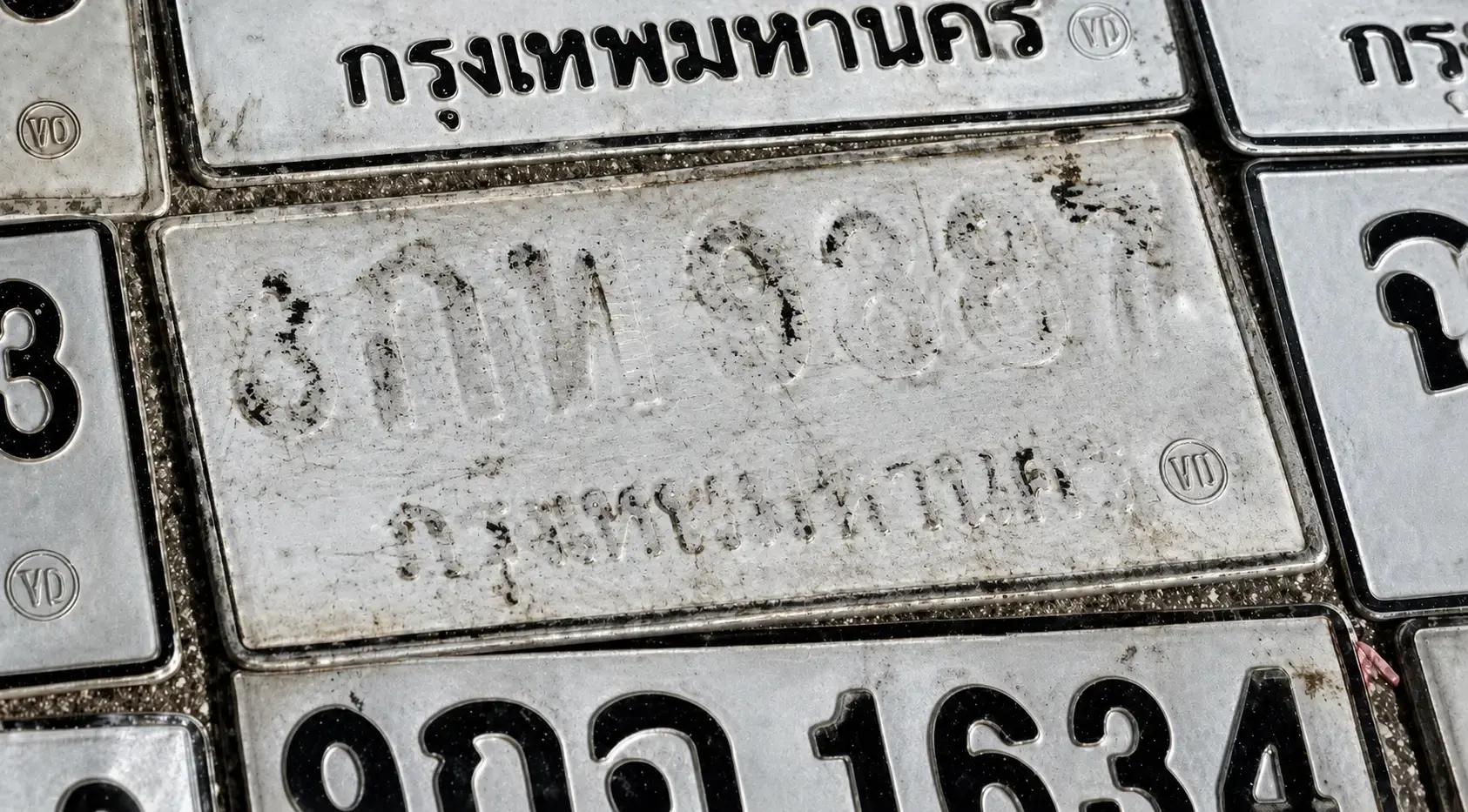
The cameras are getting smarter, the fines are getting stickier, and a lot of Thai number plates have long gone shy, especially at the front.

Glance in your rear-view mirror on any Thai highway and you’ll notice quite a number of cars with an identity crisis. A Thai plate is supposed to be simple: two Thai consonants, a few digits and the province underneath, something like กข 1234 Bangkok. But the pickup tailgating you seems to say “ก? 12??” and then “Bangkok,” or possibly “Buriram,” or maybe nothing at all. The letters and digits have been sun-bleached, scuffed, smeared, framed into oblivion or tucked behind a bumper bar that serves no purpose except to keep the camera from seeing.
And it’s nearly always the front plate. That’s no accident: Thailand’s speed and red-light cameras mostly photograph cars as they approach, so the front plate is the one that matters. The rear plate often stays neat and legible, ready for any police officer who pulls you over to admire it.
This is the art of the ghosted plate, and it’s thriving.
On paper, it’s a very bad idea. A plate that can’t be read breaks Section 11 of the Motor Vehicle Act, which costs up to 2,000 baht. In theory. Hide part of the number behind a fancy frame and the Land Traffic Act raises that to 4,000. In theoretical theory. Go all the way and forge a plate, and you’re into prison territory: six months to five years. On paper.
In practice, ghosting your plate is about as risky as ordering your som tam extra spicy.
Last year the Royal Thai Police’s own traffic image chief admitted that highway officers who stopped drivers with unreadable plates had mostly given them a friendly word of advice and sent them on their way to fix it, with no prosecutions. That counts as enforcement in the gentlest possible sense.
The creativity on display deserves a museum. There’s the classic gold leaf, applied to plate digits for good fortune, which happens to blind a speed camera too. There’s the remote-controlled flip plate, which switches numbers at the push of a button, as if the car were in its own spy film. And back in 2017, a trio of Chiang Mai students simply held a sandal over the plate. Police tracked them down anyway, but it remains the purest expression of the genre. It takes real craftsmanship to make a plate vanish so convincingly, and then tell the boys in brown that it was merely the work of nature.
So why bother? Thailand’s camera tickets used to be more of a suggestion. A vast majority of ticketed drivers simply don’t pay. Since Aug. 1 this year, unpaid fines have been linked to your annual vehicle tax: you can still pay the tax, but you won’t get the sticker until the fines are cleared. The first of those unpaid tickets should be showing up at Land Transport offices right about now.
In other words, the camera has finally grown teeth, and some drivers have responded by making sure it never gets a proper look at their front plate.
Meanwhile, the authorities keep installing more cameras: AI-assisted ones at hundreds of Bangkok intersections that can read plates and even spot drivers. They’re among the most sophisticated eyes on any road in Asia. They just can’t see through a sandal.
Which leaves the rest of us, with our clean, shiny, perfectly legible plates, front and back, every consonant and digit on display like a confession. We obey the law, we pay the fines, and we get the tickets. Idiots, the lot of us.
Thailand, as ever, has laws worthy of Switzerland. It’s the plates that keep disappearing.